
Genetic Age: What It Means and How to Support Healthier Ageing
Updated: Apr 15
Genetic age is commonly used to describe the biological age of your genes and cells. Unlike chronological age, which simply reflects the number of years since you were born, genetic age can differ from one person to another. It is influenced by lifestyle, environmental exposure, and overall health.
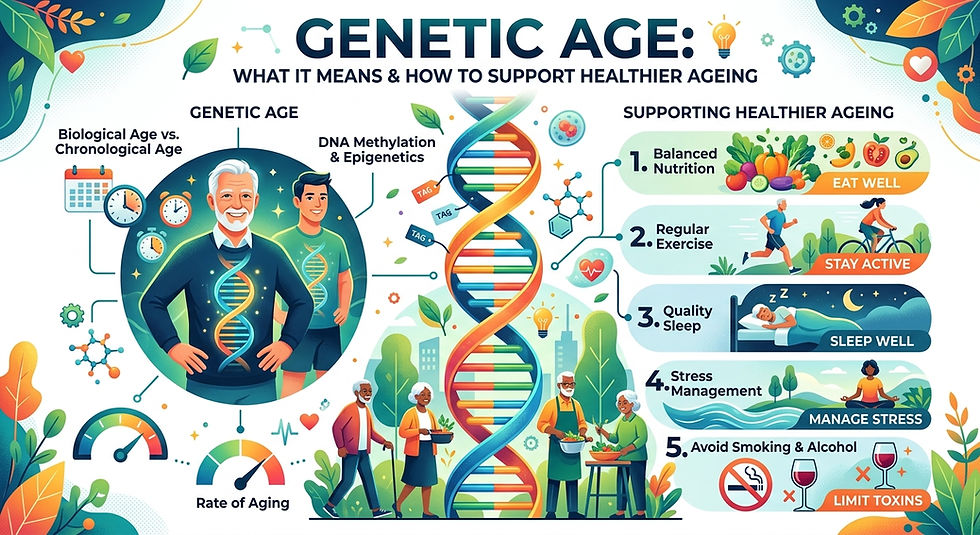
There is no single way to estimate genetic age. Different approaches aim to understand how quickly the body shows signs of ageing at a cellular level and how much wear and damage builds up over time. Knowing your genetic age can help you better understand your long-term health risks and make more informed choices about your wellbeing.
What Factors Influence Your Genetic Age?
A person’s genetic age reflects how quickly their cells appear to be ageing. Your chronological age always moves forward at the same pace, but your genetic age may be affected by how you live every day.
Several factors can play a role, including:
smoking
diet quality
exercise levels
stress
environmental exposure
general health
Public health guidance in England also highlights that modifiable factors such as smoking, poor nutrition, and physical inactivity can affect how people age over time. This is reflected in NHS England guidance on healthy ageing and preventable risk factors.
For example, people who smoke often show signs of faster ageing than those who do not. By contrast, people who eat well and stay physically active may maintain a younger genetic age in relation to their chronological age. So while genetics does matter, daily habits can still have a significant impact.
How Can You Reduce Your Genetic Age?
There is no instant solution, but several simple habits may help support healthier ageing over time.
Eat a Healthy Diet Rich in Antioxidants
A balanced diet can help protect your cells from damage and support normal body function. Foods rich in antioxidants may help reduce oxidative stress, which is often associated with ageing.
Exercise Regularly
Regular physical activity helps improve circulation, supports overall fitness, and encourages normal cell repair processes. Exercise can also help the body remain stronger and more resilient as the years pass.
Prioritise Rest and Recovery
Getting enough rest is essential for healthy ageing. Sleep and recovery support the body’s ability to repair itself and maintain good physical and mental function.
Manage Stress
Stress can have harmful effects on the body and may contribute to faster ageing. Taking time to relax, recover, and protect your mental wellbeing is therefore an important part of maintaining a healthier genetic age.
By following these simple habits, you may help support a lower genetic age and improve your overall quality of life.
What Are the Benefits of Reducing Genetic Age?
Ageing is a natural process, but its effects are not the same for everyone. In practice, reducing genetic age is often understood as slowing the visible and internal effects of ageing rather than literally stopping time.
This can be approached through lifestyle changes such as diet, exercise, better rest, and stress management. In research settings, more advanced approaches, including gene-based therapies, are also being explored.
Potential benefits of supporting a lower genetic age may include:
better cognitive function
a lower risk of some age-related diseases
improved energy and stamina
healthier-looking skin
fewer visible signs of ageing, such as wrinkles
a more active lifestyle
a better quality of life over time
For some people, these improvements may also contribute to a longer and healthier lifespan.
Genetic Age and Long-Term Wellbeing
Although genetics plays a role in the ageing process, it is not the only factor that matters. The choices you make each day can influence how your cells respond to time, stress, and environmental challenges.
Supporting a healthier genetic age is not about perfection. It is about building habits that help your body function well for longer and reduce the impact of age-related decline over time.
Conclusion
Genetic age offers a different way to think about ageing. While your chronological age is fixed, your genetic age is more closely linked to the condition of your cells and the way you live.
By eating well, exercising regularly, managing stress, and getting proper rest, you may help support a younger genetic age and better long-term health.
If you want to go further, you can explore our DNA tests, learn more about the DNA genetic profile, and review our approach to the protection of genetic data.