
How to Live Longer in Good Health: 6 Evidence-Based Healthy Ageing Habits
Living longer only has real value when the additional years can be spent, as far as possible, in good health and with a reasonable level of independence. The central question is therefore not simply how to delay death, but how to preserve mobility, memory, muscle strength and quality of life as we grow older.
Researchers use the term healthspan to describe the period of life spent without a major disability or severely limiting illness. It is different from lifespan, which refers only to the total number of years lived.

The distinction is particularly important in the United Kingdom. According to the Office for National Statistics, healthy life expectancy at birth fell to 60.7 years for males and 60.9 years for females in 2022–2024. In England, the most recent figures available specifically for people aged 65 showed that men could expect another 10.1 years in good health and women another 11.2 years in 2021–2023. These are population estimates rather than predictions for any individual.
Advances in genetics, cellular medicine and the biology of ageing are opening promising areas of research. Some health-related DNA tests examine genetic predispositions associated with nutrition, metabolism or certain diseases. However, no genetic result can currently predict precisely how long someone will live.
Readers considering this type of analysis can explore the available health DNA testing information, while keeping in mind that genetics represents only one part of a much broader health picture.
One animal has become especially important in the scientific study of longevity: the naked mole-rat. Its unusual biology may help researchers understand why some organisms age more slowly than others. It does not, however, prove that humans will soon be able to live for several centuries.
The Naked Mole-Rat: A Mammal That Ages Exceptionally Slowly
The naked mole-rat is a small subterranean rodent native to East Africa. Its body is comparable in size to that of a mouse, but its lifespan is remarkably different.
A laboratory mouse typically lives for around two to four years. A naked mole-rat can live for more than 30 years, and some individuals observed in research colonies have survived beyond the age of 37.
This difference is sometimes described as the equivalent of a human living for approximately 600 years. The comparison illustrates how unusual the animal is, but it should not be treated as a serious biological conversion. Lifespans cannot be transferred from one species to another through simple proportional calculations.
Its risk of death appears to rise very little with age
In most mammals, the probability of dying increases progressively after adulthood. This pattern is commonly described by the Gompertz law, under which mortality risk tends to rise exponentially with age.
The naked mole-rat appears to follow a different pattern. Researchers analysing thousands of animals found no detectable age-related increase in mortality risk during the period studied.
A landmark study published in eLife reported that naked mole-rat mortality did not follow the usual Gompertzian pattern. Later analyses using a larger dataset continued to support the existence of an unusual mortality profile in this species.
This does not make the naked mole-rat immortal. It can die, develop disease and experience age-related biological changes. Its rate of ageing nevertheless appears exceptionally slow for an animal of its size.
Is the naked mole-rat immune to cancer?
The naked mole-rat is often described as an animal that never develops cancer. That claim is inaccurate.
Cancer is extremely rare in this species, but documented cases have occurred, particularly among older animals living in captivity. Several spontaneous tumours have been described, confirming that its cancer resistance is substantial rather than absolute.
Its tissues do possess several mechanisms that may help suppress tumour development. One of the best studied involves an unusually large form of hyaluronan, also called hyaluronic acid.
Naked mole-rat cells produce very-high-molecular-mass hyaluronan in large quantities. Laboratory research suggests that this substance may help prevent cells from multiplying uncontrollably and becoming malignant. Removing it makes naked mole-rat cells more vulnerable to cancerous transformation.
The animal also appears to preserve certain cardiac functions and withstand several forms of cellular stress unusually well. These characteristics may eventually help scientists identify new therapeutic targets for cancer, cardiovascular disease and other conditions associated with ageing.
There is currently no evidence that these protective mechanisms can be reproduced safely and effectively in humans.
Is Living to 120 a Realistic Goal?
Progress in regenerative medicine, cell therapy, gene therapy and disease prevention may change how human ageing is managed. Some researchers believe that medical advances could considerably extend healthy human life over the coming decades.
The suggestion that dying before the age of 120 might one day be regarded as premature remains speculative. It is not a current medical consensus.
The longest fully authenticated human lifespan remains 122 years and 164 days. No verified individual has yet exceeded that age. Living to 120 is therefore biologically possible, but exceptionally rare.
Scientists also continue to debate whether human lifespan has a fixed biological ceiling. A record age does not necessarily prove the existence of an absolute limit, but neither does it show that such ages will become common.
Modern medicine can prevent, detect or treat more diseases than in previous generations. It still cannot:
guarantee that an individual will reach the age of 120;
prevent every form of cancer;
eliminate all cardiovascular or neurodegenerative diseases;
stop every biological mechanism involved in ageing.
The most realistic objective is therefore to extend healthspan rather than merely lifespan. Ten additional years offer limited benefit when they are dominated by severe disability, complete dependence or debilitating illness.
Can Telomeres Measure Biological Age?
Protective caps at the ends of chromosomes
Telomeres are repetitive DNA sequences located at the ends of chromosomes. They are often compared with the plastic tips on shoelaces because they prevent chromosome ends from becoming damaged or confused with broken DNA.

Each time many types of cell divide, their telomeres tend to become shorter. When telomeres become critically short, the cell may stop dividing, die or enter a state known as cellular senescence.
A senescent cell remains in the body but no longer divides normally. The accumulation of senescent cells is being studied as one of several processes associated with ageing, chronic inflammation and loss of tissue function.
In 2009, Elizabeth Blackburn, Carol Greider and Jack Szostak received the Nobel Prize in Physiology or Medicine for their work on how telomeres and the enzyme telomerase protect chromosomes.
For a broader explanation of chromosomes, genetic variants and laboratory markers, our guide to DNA genetic analysis explains the main concepts in accessible terms.
Short telomeres cannot reveal exactly how long you will live
Telomere length is sometimes marketed as a direct measurement of biological age. Under this interpretation, a person with longer telomeres would be biologically younger and more likely to live longer.
The reality is considerably more complex.
Telomere length is influenced by:
inherited genetic factors;
chronological age;
the organ or tissue being analysed;
the type of cells collected;
tobacco smoke and certain pollutants;
inflammation;
long-term stress;
laboratory measurement methods.
Telomere length can be useful when researchers compare large populations. An isolated measurement cannot reliably determine an individual’s exact biological age or predict their date of death.
A telomere test should not be interpreted as a complete medical diagnosis. Epigenetic, metabolic, inflammatory, cardiovascular and functional indicators may all contribute to a more meaningful assessment of biological ageing. Even then, biological age remains an estimate rather than a precise medical measurement.
Can lifestyle changes lengthen telomeres?
Researchers have examined whether physical activity, nutrition, sleep, stress management and social support affect telomere maintenance.
One small pilot study followed men with low-risk prostate cancer who adopted an intensive lifestyle programme. Increased telomerase activity was observed after three months. Five years later, researchers also recorded a relative increase in telomere length in the intervention group compared with controls.
The study had significant limitations, including a small number of participants and an inability to generalise the findings to the wider population.
A healthy lifestyle may help preserve cellular health and reduce factors associated with accelerated telomere shortening. It would nevertheless be misleading to promise that a particular programme will produce a measurable increase in telomere length within a fixed number of months.
The 6 Main Pillars of Living Longer in Good Health
Longevity results from a combination of genetic, environmental, medical, social and behavioural factors. No single food, supplement, DNA test, fasting protocol or exercise programme can control the ageing process.
Several habits are nevertheless supported by sufficiently strong evidence to reduce the risk of chronic disease and help preserve independence.
1. Move Every Day and Protect Your Muscle Mass
Do you need 30 minutes of exercise every day?
Approximately 30 minutes of cardiovascular activity a day is a practical target for many adults. It may include:
brisk walking;
cycling;
swimming;
running;
rowing;
dancing;
climbing stairs;
gardening or moderate physical work.
The updated UK Chief Medical Officers’ guidance retains the target of at least 150 minutes of moderate-intensity activity each week, or 75 minutes of vigorous activity. Adults should also perform activities that maintain strength on at least two days a week.
The 2026 update places greater emphasis on daily movement, balance and breaking up long periods of sitting. It also confirms that activity does not have to take place in lengthy, structured sessions. Even small amounts are beneficial when compared with complete inactivity.
Thirty minutes does not need to be completed without interruption. A person returning to exercise could divide it into three ten-minute periods or incorporate shorter walks and active tasks throughout the day.
Does exercise reduce every disease risk by 40%?
Physical activity is associated with a lower risk of cardiovascular disease, several cancers, cognitive decline and premature death. However, there is no single 40% reduction that applies to every disease and every individual.
The size of the benefit depends on:
the disease being studied;
exercise intensity;
frequency and duration;
age and sex;
existing health conditions;
previous levels of inactivity;
other lifestyle factors.
The greatest proportional improvement is often seen when someone moves from almost no activity to a modest amount. A person does not need to become a competitive athlete before experiencing meaningful health benefits.
Exercise also stimulates the release of endorphins and other chemical messengers involved in mood, stress regulation and pain perception.
Does the body wait 20 minutes before burning fat?
The claim that the body burns only sugar during the first 20 minutes of exercise and then suddenly switches to fat is an oversimplification.
From the beginning of physical activity, the body uses several energy sources simultaneously:
glucose circulating in the bloodstream;
glycogen stored in the muscles and liver;
fatty acids released from fat stores.
The contribution of each source changes gradually. It depends on exercise duration, intensity, fitness level, recent food intake and individual metabolism.
There is no biological switch that activates fat burning at precisely 20 minutes.
Longer sessions can still be useful because they increase total energy expenditure. During sustained moderate activity, fat may also provide a greater relative share of the energy used.
Strength training is essential for healthy ageing
Cardiovascular fitness is not enough on its own. Muscle mass is central to mobility, balance, joint protection, metabolic health and the ability to remain independent.
Muscle mass generally begins to decline gradually after the age of 30. Estimates commonly suggest a loss of around 3% to 8% per decade during early and middle adulthood.
The process may accelerate after the age of 50 or 60. In some people, muscle loss can approach 1% to 2% per year, particularly when physical inactivity, illness or insufficient protein intake is involved.
Two strength-training sessions a week can already be beneficial. Suitable options include:
bodyweight exercises;
resistance bands;
free weights;
guided weight machines;
functional exercises recommended by a physiotherapist.
Progress should be gradual. Anyone with cardiovascular disease, a chronic condition, major joint pain or a long period of inactivity should seek appropriate professional guidance before significantly increasing exercise intensity.
2. Improve Your Diet and Recognise Satiety
Reduce excess rather than imposing extreme restriction
A 30% reduction in calorie intake is sometimes promoted as a method capable of increasing lifespan by 20%.
Calorie restriction without malnutrition has extended lifespan in several animal species. Results from worms, flies, mice and some primates cannot be directly transferred to humans.
The CALERIE trial studied calorie restriction in non-obese adults over two years. The original target was a 25% reduction, but participants achieved an average reduction of approximately 12%.
Researchers observed improvements in several cardiometabolic markers. Later analysis also found a modest slowing in one epigenetic measurement of the pace of ageing. Other biological-age measurements did not show the same effect, and the study did not demonstrate a 20% increase in human lifespan.
Severe calorie restriction can result in:
nutritional deficiencies;
loss of muscle mass;
reduced bone density;
fatigue;
hormonal disruption;
disordered eating.
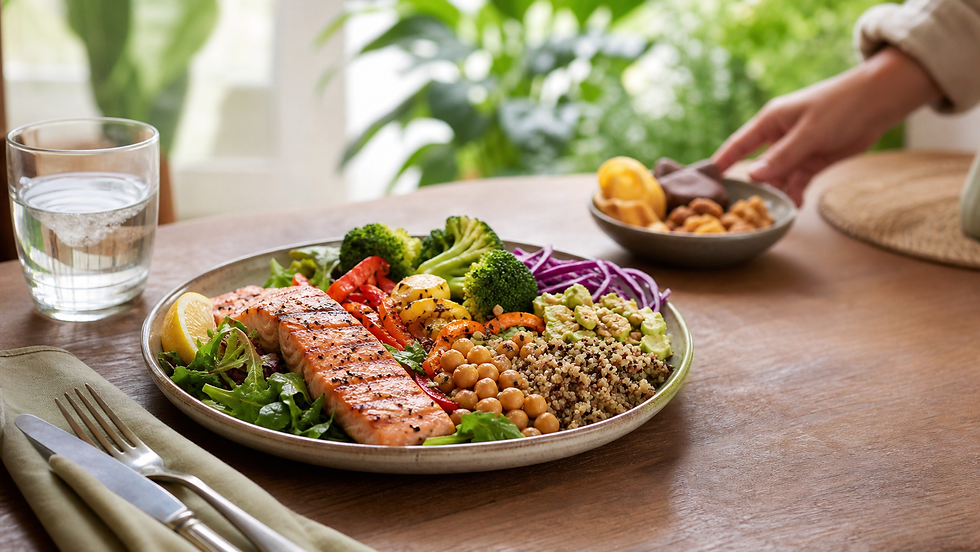
The practical objective should not be to remove an arbitrary percentage from every meal. A more sustainable approach is to reduce highly calorific foods that provide little lasting satiety while preserving protein, fibre, micronutrients and sufficient overall energy.
Individual responses to food are partly influenced by genetics. Our guide to DNA testing and diet explains the possible uses and current limitations of nutrigenetic testing.
Can two squares of dark chocolate suppress appetite?
Eating two squares of 100% dark chocolate is sometimes recommended as a method of reducing ghrelin, one of the hormones involved in hunger.
Small studies suggest that dark chocolate may temporarily affect appetite, satiety or certain hormonal measurements. However, the quantities consumed and cocoa concentrations vary considerably between studies.
There is not enough evidence to recommend two squares of 100% dark chocolate as a universal appetite-control technique.
It may be appropriate for some people, provided that it:
remains a modest portion;
is enjoyable and well tolerated;
does not replace a balanced meal;
is not treated as a therapy for binge eating or compulsive eating.
Pause during meals
Taking a short pause while eating may help a person notice the early signs of satiety.
Digestive and hormonal signals do not reach the brain immediately. When food is eaten very quickly, someone may continue eating before fully realising that their hunger has subsided.
There is no scientifically established rule requiring a pause of exactly five minutes. The broader principle is more useful:
put down the cutlery;
slow the breathing;
notice whether physical hunger remains;
resume eating only when there is still a genuine need.
This approach encourages more attentive eating without imposing rigid restrictions.
Choose foods that provide lasting satiety
Sardines and apples with cinnamon are sometimes recommended as foods that may reduce snacking.
Sardines contain protein and fat, both of which generally slow digestion and help maintain fullness.
Apples provide water and fibre. They are therefore likely to be more filling than fruit juice or a heavily sweetened snack. Cinnamon may improve flavour, but it does not turn an apple into a medical appetite suppressant.
A satisfying meal will usually combine:
a source of protein;
vegetables;
fibre;
a minimally refined carbohydrate when required;
an appropriate amount of fat;
water.
Highly processed or sugar-rich foods are often easy to eat quickly and may provide less lasting satiety.
3. Use Intermittent Fasting Cautiously
Intermittent fasting describes a range of eating patterns that alternate between periods of food intake and periods without calories.
A daily fasting period of 12 to 16 hours may be created by eating breakfast later, bringing dinner forward or avoiding late-night snacks while continuing to drink water.
A 12-hour overnight fast is already part of many ordinary routines. Someone who finishes dinner at 8 pm and eats breakfast at 8 am has completed a 12-hour fasting period.
Does fasting activate autophagy?
Reduced nutrient availability affects metabolic pathways involved in glucose, insulin, cellular maintenance and energy production.
Fasting may stimulate autophagy, a process through which cells degrade and recycle damaged or unnecessary components. However, researchers cannot currently identify a universal point at which autophagy significantly increases in every human.
The response may depend on:
the tissue being examined;
fasting duration;
habitual diet;
energy balance;
metabolic health;
individual physiology.
An exploratory human study involving people with obesity suggested that intermittent time-restricted eating may increase certain indicators of autophagic flux. These findings are promising but are not sufficient to define a fasting threshold that applies to everyone.
Does intermittent fasting prevent cancer?
There is no proof that fasting for 12 to 16 hours a day directly prevents cancer cells from developing in humans.
Cell and animal studies have identified potentially relevant mechanisms, but high-quality clinical evidence remains limited. Current research does not show that intermittent fasting prevents or treats cancer in humans.
Autophagy also has a complex role in cancer. In healthy cells, it may limit the accumulation of damage. Once a tumour is established, however, some cancer cells can use autophagy to survive metabolic stress or medical treatment.
Fasting should never replace cancer screening, diagnosis, medical consultation or treatment.
Who should avoid intermittent fasting?
Intermittent fasting is not suitable for everyone. Medical advice is particularly important for:
children and teenagers;
pregnant or breastfeeding women;
people with diabetes who use medication;
frail older adults;
people who are underweight or malnourished;
patients taking medication affected by meal timing;
anyone with a current or previous eating disorder.
Skipping breakfast is not compulsory. A longer overnight fast can also be created by eating dinner earlier or removing late-evening snacks.
4. Protect Your Sleep and Continue Learning
Aim for at least seven hours of sleep
Sleep contributes to memory consolidation, immune function, hormonal regulation and physical recovery.
For most adults, at least seven hours a night is a reasonable general target. Some people naturally require more.
Regularity also matters. Frequently changing bedtime and waking time can disturb circadian rhythms even when the total amount of sleep appears sufficient.
A supportive sleep environment normally includes:
a quiet bedroom;
a moderate temperature;
comfortable bedding;
limited screen exposure before bed;
as little light as reasonably possible during the night.
Persistent insomnia, excessive daytime tiredness, loud snoring or suspected sleep apnoea should be discussed with a GP.

Why is darkness important during sleep?
Light is one of the principal signals controlling the body clock. Significant exposure in the evening or during the night can disrupt circadian rhythms and suppress melatonin secretion.
Sleeping in a dark room is therefore preferable where possible.
An eye mask may be useful when:
street lighting enters through the curtains;
blinds do not adequately block light;
someone works night shifts and sleeps during the day;
people sharing a room follow different schedules.
The mask should be comfortable, breathable and should not press heavily on the eyes.
Learning supports brain plasticity
The brain retains a capacity to adapt throughout life. This property is known as neuroplasticity.
Learning a new skill challenges different neural networks. Suitable activities may include:
learning another language;
playing a musical instrument;
dancing;
juggling;
learning new software;
developing a practical craft;
playing a strategic game;
practising an art form.
Brain-imaging studies have identified changes in grey matter among adults learning to juggle. Similar changes have also been observed in some older participants.
This does not mean that juggling, or any other individual activity, can prevent Alzheimer’s disease. It shows that the adult brain can continue to change in response to repeated and sufficiently demanding learning.
Novelty, gradual difficulty and regular practice matter more than the particular activity chosen.
5. Protect Sexual Health and the Pelvic Floor
Sexual activity and longevity: association is not causation
A satisfying sex life is sometimes presented as a factor that may support wellbeing and longevity.
Observational studies have found associations between sexual activity, self-reported health, quality of life and, in some cases, a lower risk of mortality.
These findings do not demonstrate that sexual activity directly extends life. People who are physically and psychologically healthier are also more likely to remain sexually active.
There is no ideal frequency that applies to everyone.
A healthy sexual life depends primarily on:
consent;
freedom from pressure;
physical and emotional comfort;
relationship quality;
respect for personal boundaries;
appropriate treatment for pain or dysfunction.
A lack of sexual activity should not be described as harmful or as a direct cause of accelerated ageing.
Can pelvic floor exercises prevent urinary leakage?
The pelvic floor is a group of muscles located at the base of the pelvis. It supports the bladder and rectum and, in women, also contributes to the support of the uterus.
Short daily contraction exercises are sometimes recommended to improve bladder control, pelvic function and sexual comfort.
Pelvic floor muscle training is an important conservative treatment for certain forms of incontinence, particularly stress urinary incontinence in women. Correctly prescribed training may reduce leakage and improve symptoms.
Technique is more important than completing an arbitrary three-minute routine.
Excessive or poorly performed contractions may be ineffective. They can also worsen discomfort when the pelvic floor is already overactive or too tense. Some people need to learn how to relax these muscles rather than contract them more forcefully.
Advice from a GP, midwife or pelvic health physiotherapist is recommended when someone experiences:
pelvic pain;
persistent urinary leakage;
a feeling of heaviness or pressure;
pain during sex;
difficulty identifying or controlling the pelvic floor muscles.
6. Reduce Harmful Exposures and Improve Everyday Habits
Does peeling an apple remove 90% of pesticides?
Peeling an apple is sometimes said to remove 90% of the pesticide residues on its surface.
Removing the skin can reduce some residues, particularly those remaining on the exterior. The actual reduction depends on:
the chemical involved;
whether it has penetrated the fruit;
the time since treatment;
agricultural conditions;
washing and preparation methods.
A universal 90% figure cannot be applied to every apple or every pesticide.
The skin also contains fibre and various plant compounds, so peeling removes some of the fruit’s nutritional value.
A balanced approach is to:
rinse the apple under running water;
rub the surface carefully;
remove bruised or damaged areas;
peel it when its origin is uncertain or residue exposure is a particular concern.
UK monitoring does detect pesticide residues in some food samples, but the large majority contain no measured residues or remain at or below the relevant maximum residue limits. A legal limit does not mean that no residue is present; it indicates the maximum level permitted under the regulatory assessment.
Why should heavily burnt food be limited?
Cooking food at very high temperatures can create undesirable chemical compounds.
Blackened or charred areas of meat, fish and poultry may contain:
heterocyclic amines;
polycyclic aromatic hydrocarbons.
These compounds form more readily during prolonged high-temperature cooking, direct flame contact or when fat drips onto hot coals and produces smoke.
Some are mutagenic in laboratory experiments, meaning that they can damage DNA.
Practical precautions include:
limiting heavily blackened portions;
cutting away carbonised areas;
avoiding prolonged direct contact with flames;
turning food regularly;
alternating between different cooking methods.
Overcooking starchy foods such as potatoes, bread, biscuits and pizza dough can also increase the formation of acrylamide.
Animal studies have raised concerns about acrylamide, although the relationship between normal dietary exposure and cancer in humans remains uncertain.
Lightly browned food should not be described as extremely dangerous. The reasonable recommendation is to avoid regularly eating food that is heavily burnt, charred or blackened.
Reduce tobacco and alcohol exposure
Avoiding tobacco remains one of the most effective ways to reduce the risk of cancer, cardiovascular disease, respiratory illness and premature death.
Alcohol is also associated with several health risks, including liver disease, cardiovascular problems and multiple cancers. Drinking less generally reduces risk. Alcohol should not be promoted as a longevity strategy, even when individual drinks contain compounds sometimes described as beneficial.
Can a toilet stool improve bowel movements?
Placing a small stool under the feet raises the knees and moves the body closer to a squatting position.
This changes the angle between the rectum and anal canal and may reduce the effort needed to pass stool for some people.
Small studies have reported less straining and less time spent on the toilet. Other research involving people with constipation has not found a significant improvement in bowel emptying.
A toilet stool can be a simple option to try, but it is not a universal treatment.
For persistent constipation, priorities include:
drinking enough fluid;
consuming sufficient fibre;
exercising regularly;
responding promptly to the urge to open the bowels;
seeking medical advice when symptoms persist.
A prescribed laxative should not be stopped without professional guidance.
Autophagy: The Cell’s Recycling System
Autophagy is a natural process through which cells break down and recycle components that are damaged, unnecessary or no longer functioning correctly.
It contributes to:
energy production during periods of cellular stress;
the removal of altered proteins;
the renewal of cellular structures;
maintenance of the cell’s internal balance.
Autophagy is affected by nutrient availability, physical activity and various forms of metabolic stress.
It is sometimes described as a cellular “self-healing power”. This wording becomes misleading when it suggests that the body can remove every disease without medical treatment.
Autophagy does not replace:
vaccination;
screening;
medical diagnosis;
medication;
surgery;
clinical monitoring.
Its role in cancer is particularly complex. Autophagy can protect healthy cells against accumulated damage. Conversely, some tumour cells can use the same mechanism to remain alive when nutrients are limited or when they are exposed to treatment.
Attempting to “maximise” autophagy is therefore neither a recognised medical objective nor a guarantee of disease prevention.
What Actually Helps You Live Longer in Good Health?
The naked mole-rat demonstrates that a mammal can evolve unusually effective mechanisms for cellular protection, tissue preservation and resistance to age-related disease.
Research into this species is contributing to the study of DNA repair, cellular senescence, inflammation, cancer and tissue maintenance. It does not prove that humans will soon live for 120 years, let alone several centuries.
Based on current evidence, the most credible measures remain relatively accessible:
perform regular cardiovascular activity;
include strength and balance exercises;
reduce prolonged sitting;
follow a balanced diet without extreme restriction;
protect sleep duration and regularity;
continue learning demanding new skills;
look after relational, sexual and pelvic health;
avoid tobacco and reduce alcohol consumption;
limit heavily charred food;
approach intermittent fasting cautiously;
attend appropriate medical checks and screening appointments.
None of these habits guarantees exceptional longevity. Combined consistently, however, they can reduce several major risk factors, support physical and cognitive function and improve the likelihood of ageing with greater independence.
Can ageing genuinely be slowed down?
Ageing cannot currently be stopped. Regular physical activity, balanced nutrition, sufficient sleep, avoiding tobacco and reducing alcohol can nevertheless influence several processes associated with chronic disease, frailty and loss of independence.
Can a telomere test predict how long I will live?
No. Telomere length is one biological marker among many. It varies according to tissue, inheritance, environment and laboratory method. It cannot accurately calculate an individual’s biological age or life expectancy.
Is intermittent fasting essential for longevity?
No. Available evidence does not show that intermittent fasting directly extends human lifespan. It may improve certain metabolic markers in some people, but it is not suitable for everyone and does not replace a balanced diet.
Do I have to exercise for 30 minutes every day?
Not necessarily. UK guidance recommends working towards at least 150 minutes of moderate activity or 75 minutes of vigorous activity each week. Activity can be distributed across several days and accumulated in shorter sessions. Strength exercises should also be included at least twice a week.
Can a human live to 120?
Yes, it is biologically possible, as the verified human longevity record exceeds 122 years. It remains extraordinarily rare. Current medicine cannot guarantee that age or prevent every mechanism involved in ageing.